
What Really Happens to Your Donated Clothes at Goodwill
-2.png?sfvrsn=d79aee4_1)
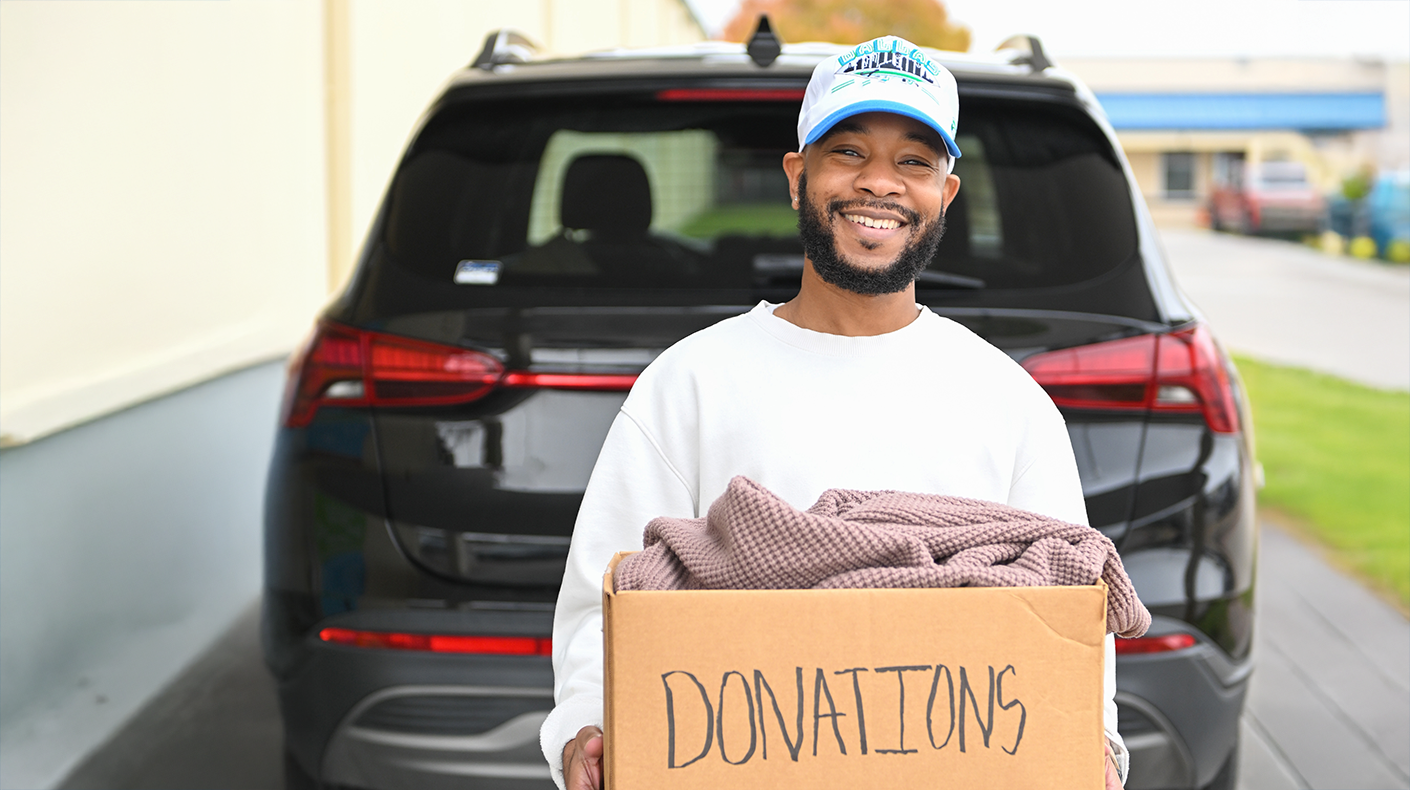
From closet clean-outs to community impact, your donations do more than you think.
When you donate clothing to Goodwill, you’re doing more than clearing out your closet—you’re helping fuel job training programs, supporting sustainability, and giving your gently used items a second chance. We sat down with Julie Deming, Goodwill’s Director of Inventory, to pull back the curtain on what really happens to your donated clothes and why your contribution matters more than you might think.
Why Clothing Donation Matters
Donating clothing doesn’t just help Goodwill—it helps your community.
“Clothing makes up about 60% of our sales floor,” Julie explains. “So every item donated helps generate store revenue, which funds our workforce programs and community services.”
And it’s not just about what sells in stores. Goodwill’s system is designed to reuse, resell, and recycle as much as possible—keeping tons of clothing out of landfills and putting them back into circulation, whether through thrift stores, online platforms, or textile recycling partnerships.
What Happens to Donated Clothes at Goodwill
You’ve probably wondered: What happens to donated clothes after I drop them off?
Once donations arrive at a Goodwill location, here’s what happens next:
- Sorting & Pricing – Items are processed in the order received. Clothing is evaluated for quality, brand, condition, and potential resale value. Some items are priced for Goodwill stores, others are routed to ecommerce, outlets, or aftermarket retail.
- Time on the Floor – Items get roughly 3 weeks on the sales floor. If they don’t sell, they may be packed into mystery bags or sent to outlet stores for sale by the pound.
- Secondary Markets – Items that still don’t sell may go to a warehouse or be routed to textile recycling partners. These items are transformed into new materials or sold to other thrift operators.
Julie emphasizes, “We really make an effort to avoid throwing anything away.” Unless an item is wet, moldy, or severely damaged, Goodwill finds a way to give it another chance.
The Environmental Impact of Clothing Donation
Donating clothes is one of the simplest and most powerful ways to fight waste. Here's why:
- It keeps textiles out of landfills
- It reduces demand for fast fashion
- It conserves natural resources and water
- It promotes circular fashion and ethical reuse
It takes 720 gallons of water to make a single cotton t-shirt. A pair of jeans? Anywhere from 1,800 to 2,900 gallons.
Every second, a garbage can’s worth of clothing is thrown away in the U.S.
Of the 25 billion pounds of textile waste generated annually, less than 1% is recycled into new textiles.
There are enough clothes on Earth to dress the next 6 generations of humans.
Goodwill is investing in traceability and textile transformation, so we can better understand where clothing goes after it leaves our hands—and eliminate greenwashing from the sustainability conversation.
Donating Clothes Helps People, Too
Your donation has a direct social impact.
Through programs like the Community Cares Voucher Program, individuals facing hardship can shop at Goodwill free of charge using donated goods. Our partnership with the Chicago Furniture Bank helps those transitioning out of homelessness furnish their homes—and their closets—with dignity.
“Every item we sell helps fund job training and career support,” Julie notes. “And sometimes, we can use donated clothing directly to help someone in need.”
How to Donate Clothes to Goodwill
If you're wondering where to donate clothes or how to donate clothes to Goodwill, here’s what you need to know:
- Drop off your donations at any Goodwill location
- Use home pickup services through partners like ReSupply or Chicago Furniture Bank
- Just make sure your items are dry and free of mold—minor wear is okay!
Why Goodwill, Not Just Resale Apps?
Donating clothing for sustainability is just one part of the story. Here's why Goodwill matters:
- Your donations directly support local workforce programs
- Our model emphasizes reuse before resale
- Your impact stays local—helping families in your neighborhood
- We extend the life of textiles that would otherwise go to waste
Unlike resale platforms, you’re not just giving clothes a second life—you’re creating opportunity.
Final Thought: Every Piece Has Potential
Julie’s favorite part of her job? Watching someone find the perfect shirt.
She recalls back-to-school season, seeing moms trying to stretch their dollar—and kids lighting up when they find something just like what their friends wear. “That’s the power of clothing donation,” she says. “It’s not just stuff. It’s dignity, confidence, and community.”
Ready to Make a Difference?
Whether you’re cleaning out a closet, helping the environment, or supporting a good cause, donating to Goodwill is always a good move.
[Find a Donation Center Near You →]
(It’s the easiest feel-good routine you’ll ever start.)